
Pegada de Gorila History
19 Years of Musical Journey
Name
The name Pegada de Gorila comes from an expression used in musical circles to describe a samba played with intensity, swing, and rhythmic strength — qualities that have become hallmarks of the group over nearly two decades of uninterrupted activity.
Trajectory
Throughout its trajectory, Pegada de Gorila has expanded its work from community samba circles to the professional circuit, developing artistic projects, releasing three albums, and consolidating performances that engage with the tradition of samba while embracing contemporaneity.
Activities
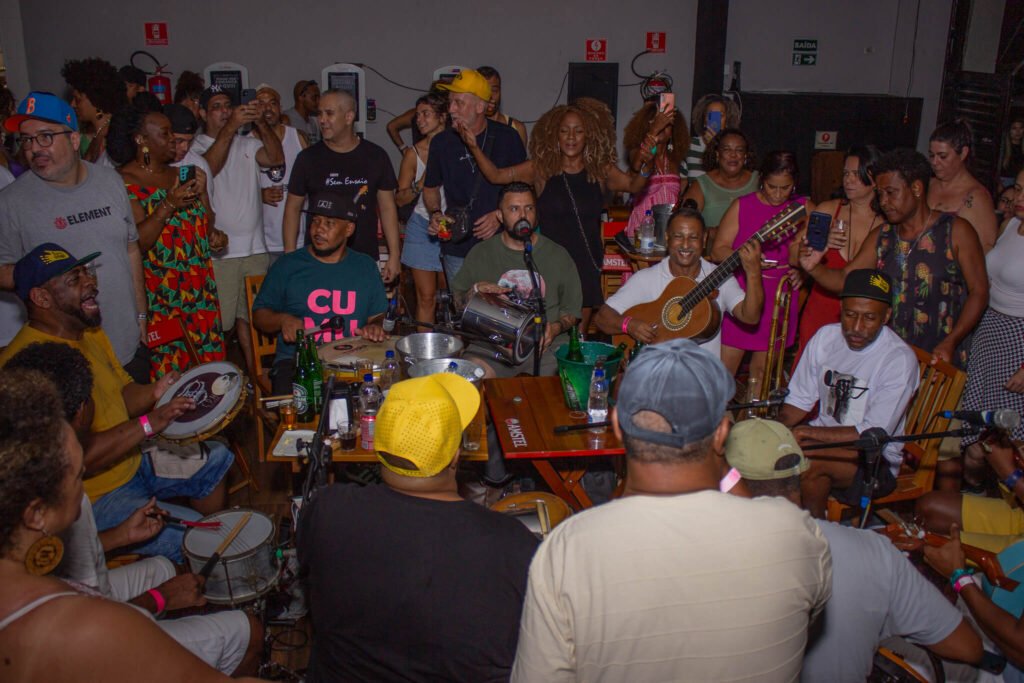
The group’s activities are also characterized by a strong connection to territory and audience development. An example of this is Papa do Gorila, an original monthly samba circle that has become a permanent space for gathering musicians, invited artists, and audiences, strengthening cultural networks, fostering intergenerational exchange, and keeping the practice of traditional samba alive in dialogue with diverse artistic trajectories.
Performances
With performances at leading cultural institutions, participation in festivals, national circulation, and recognition from specialized media, Pegada de Gorila reaffirms its commitment to the democratization of access to Brazilian popular music, understanding samba not only as a performance, but as a cultural practice, memory in motion, and collective expression.
Line-up
Formed by musicians with solid trajectories in samba, choro, and Brazilian popular music, Pegada de Gorila continues to work on an ongoing basis, maintaining a strong connection to its origins while expanding its presence across different cultural contexts, always guided by the rhythmic strength, swing, and intensity that define its identity.